Local Ice Rinks in the Copper Country
in Michigan's Western Upper Peninsula
| Rinks | Click here for Table of Contents |
The Copper Country
boasts of having THE OLDEST,
and the 7th Oldest Indoor Ice Arenas still in use in the World!!
** see below
The Calumet Colosseum, built in 1913, is the OLDEST indoor ice arena still in
use in the World!
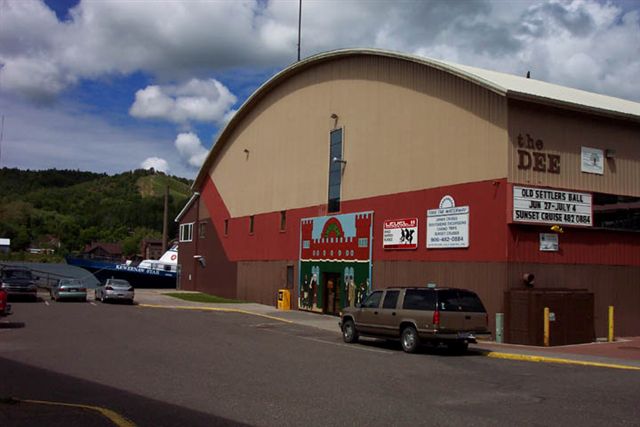
The Dee Amphidrome, built in 1927 immediately after the original 1902 rink
burned down,
is the 7th oldest indoor ice rink still in use in the WORLD!
Pre 1900:
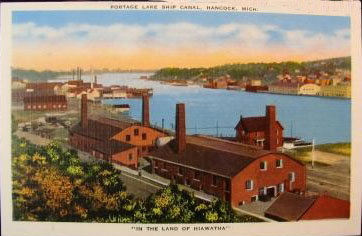
The Palace
Ice Rink, located on the North shore of Portage Lake, in Ripley, was the first
covered rink used in the Copper Country. It was used for several years at the turn of the
century as an
ice rink around 1900. It was in one of the abandoned Portage Lake
Foundry buildings, a former Lake Superior Smelting Works building. It had posts down the middle so
it made for interesting
hockey games! For a game between the Portage Lake team and Kenwood
team of Chicago, on Feb 21, 1902, to determine the Champions of the West, the
Palace was packed with 1,000 fans; many more had to be turned away as it was
filled to capacity. Portage Lake walked away as Champions of the West with a 5-0
win.
| The Palace ice rink in Ripley was closed down the day the new Amphidrome was ready for skaters on December 26, 1902. The Palace Rink Manager transferred his duties to the new Amphidrome rink in Houghton which was located just across the Portage Lake from the Palace. In 1906, Hancock hockey supporters secured the Palace and fixed it up at considerable expense for the High School and other Hancock teams to practice and hold games. The following year, according to "The Ingot", a Hancock High School publication, dated January 1907 issue: "the Amphidrome Company got control of it and refused to turn it over to the Hancock people who had paid for putting it in shape for use. It was turned over to the curlers who in turn refused to allow the use of it for the school children or teams on the ground that ice used for skating was not good enough for curling." As a result, Hancock, who's High School team had won the Michigan Championship in 1906, had no hockey teams in 1907. |
The Portage Lake Foundry
Buildings in the 1940's |
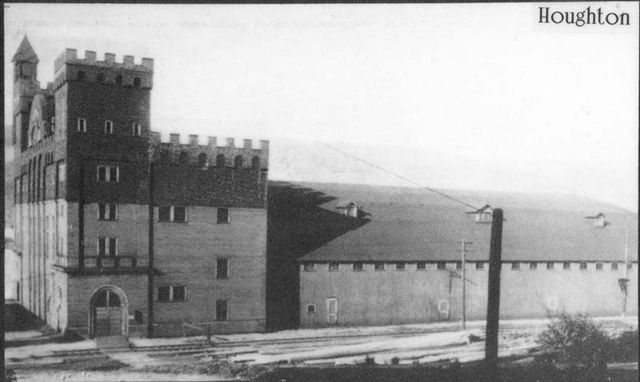
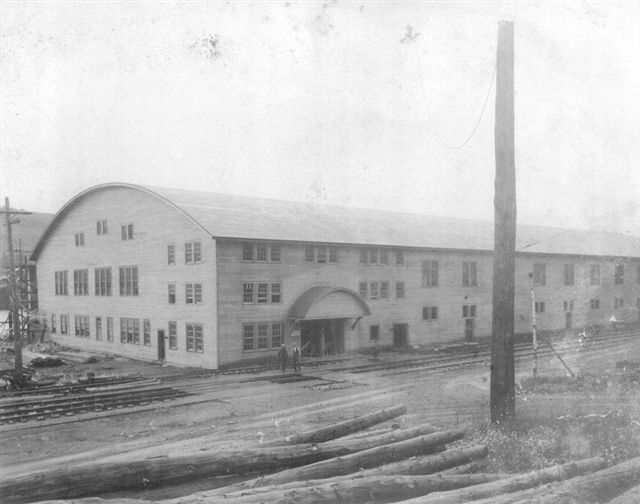
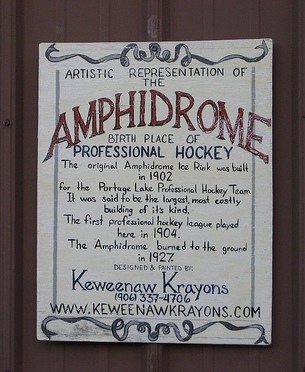
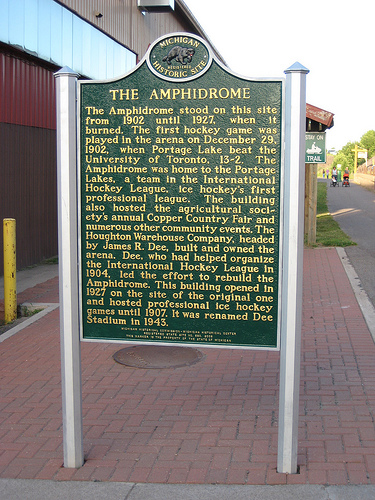
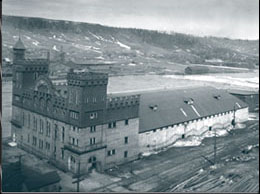
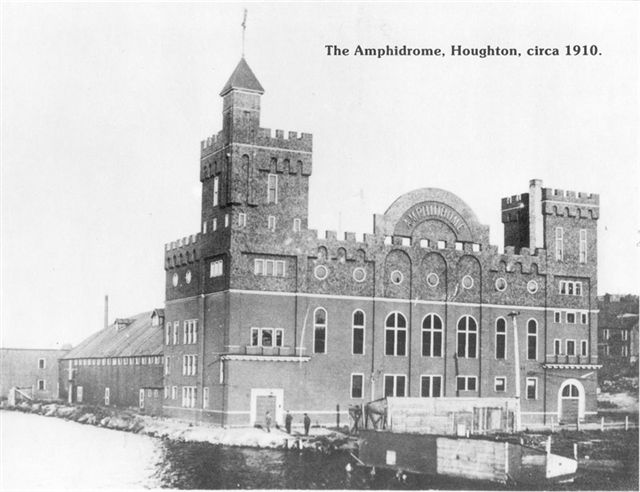
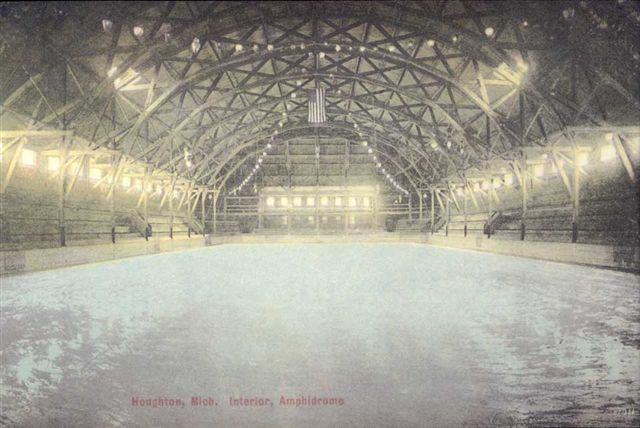
1902:The Amphidrome
was built in 1902 on the South shore of Portage Lake
in Houghton, Michigan, and was the first structure ever built in this country
specifically for hockey. The Amphidrome Company was organized in
1901 when it acquired the location on the shore of Portage Lake from the Ruppe
estate. Early the next year, the main rink building was completed.
This rink was built specifically for the Portage Lake Pro hockey team; they
played their first game there December 30, 1902. It was also used by the
other local amateur hockey teams and skaters and as a indoor roller skating rink
in the summer as well as numerous dances, the annual community fair, and other
events from 1902-1927.
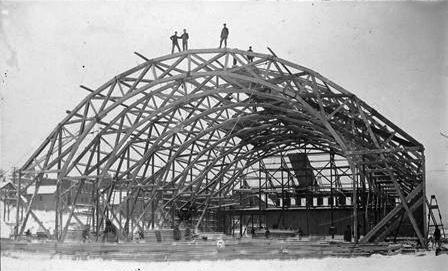
Amphidrome Construction 1901-02
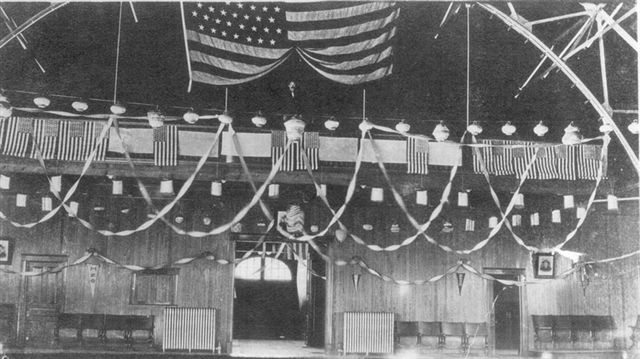
By 1907, an elaborate addition had been built at the West end of the building
at a cost of $28,000 to serve as an Armory and ballroom for community events:
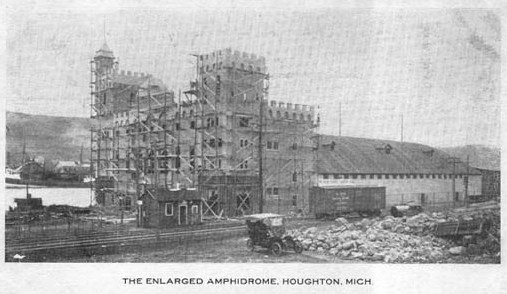
Amphidrome builds Amory addition, 1906
The Amphidrome was destroyed by fire January
9, 1927: the Daily Mining Gazette local newspaper account of the fire on 11 January, 1927 said:
"The
Amphidrome, popular social and recreational center of the Portage Lake district
for more than a quarter century, was destroyed by fire early Sunday morning just
a few hours before what promised to be one of the greatest hockey games ever
stage in the historic arena.... There had been nearly a complete sell-out of
reserved seats for the Calumet-Portage Lake game, and the management of the
hockey association had made plans to take care of a crowd of 2,000 spectators.
Calumet fans had arranged for six special street cars, and a large gathering was
coming from the north end by automobile.... It was the first enclosed
natural ice rink in the United States.... The fire was discovered at 3:45
[AM] o'clock in the upper part of the Armory annex, and within an hour the huge
structure was reduced to ashes. Beside the Amphidrome, a large warehouse owned
by the Lake Superior Produce Co. and occupied by the Hansen Motor sales, was
destroyed with all its contents, including about 30 used automobiles, two new
ones, and valuable garage machinery and equipment. The monetary loss in the
Amphidrome, including the building, furniture, equipment and hockey supplies, is
estimated as $90,000. The amount of the insurance was $27,000.... The
Portage Lake hockey team, the Michigan College of Mines team and the Houghton
and Hancock high school sextets all lost their equipment, including suits,
skates, shoes, pads, gloves and sticks. Some of the equipment belonged to the
players themselves but most of it was owned by their respective schools and
hockey clubs..."
Because both Houghton and Hancock high schools lost
their equipment and rink to practice in the fire, the regional High School
hockey season was canceled for the season. (DMG 14 Jan 1927) The Portage Lake
senior team was able to continue it's schedule by using the Calumet Colosseum as it's
home ice. The Michigan College of Mines team went on an extensive road trip of
games and had home games at the Calumet Colosseum. After the Amphidrome
fire, the rink location was quickly cleared of burned debris and the resulting outdoor
rink was flooded to make a practice ice surface. Through the tireless
efforts of James Dee and the entire community's support, the Amphidrome was rebuilt in time for
the next season and called the New Amphidrome. This rink is the 7th Oldest
indoor ice rink still in use in the WORLD!
** see below
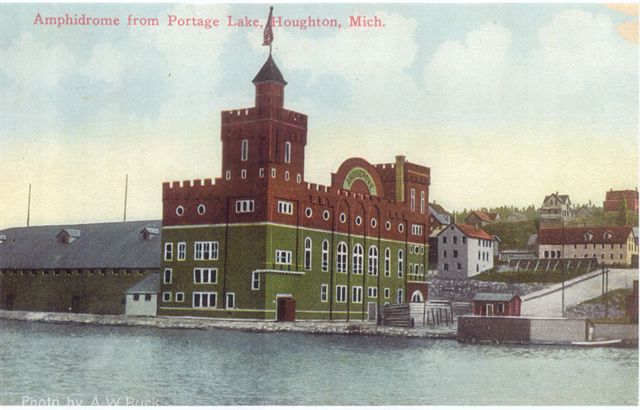 Photo from postcard mailed 1909 |
 |
|
 |
 |
|
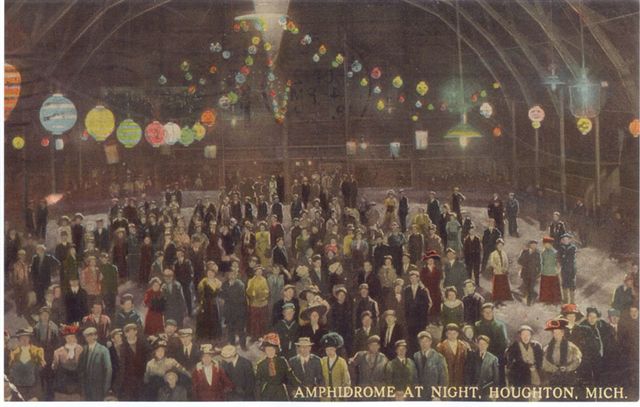 Postcard with one cent stamp |
Fair about 1915 inside Drome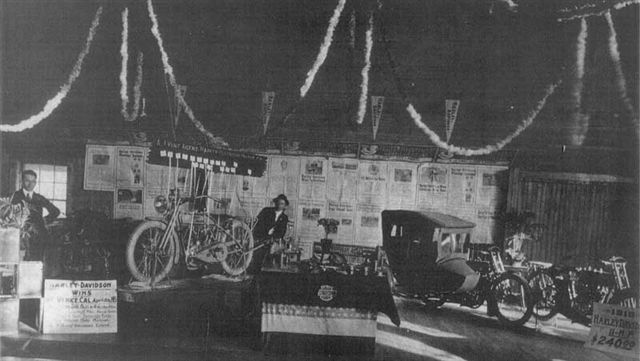
Note the Harley-Davidson Bike! |
|
Shares were issued in 1927 to pay to rebuild burned Amphidrome 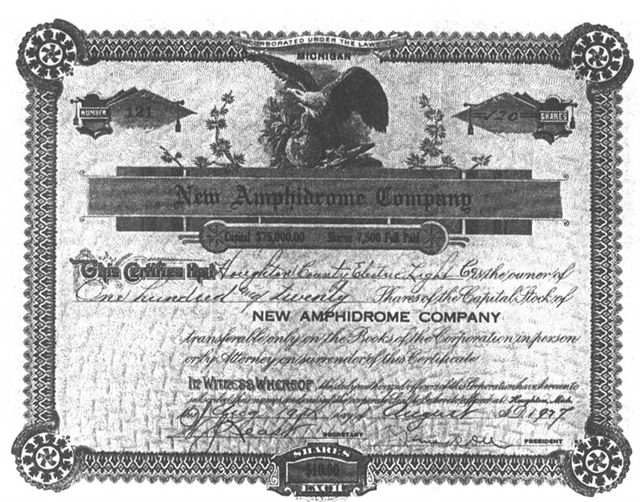 |
Skating near the location of the burned Amphidrome 1927.  |
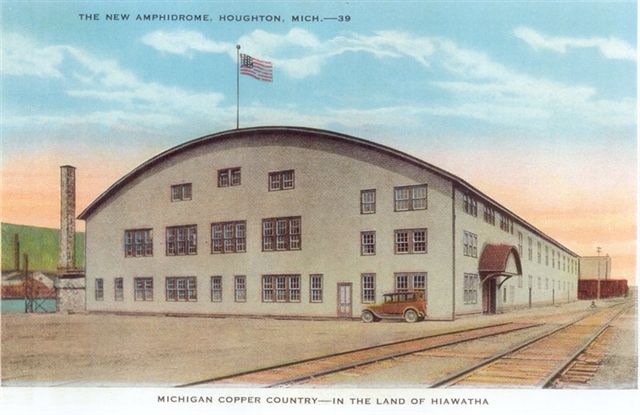
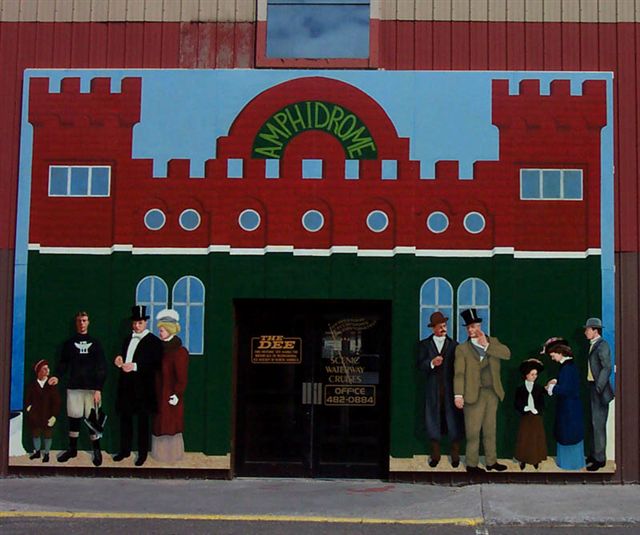
The New Amphidrome
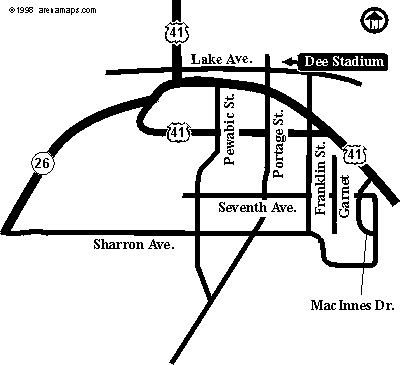
is located on the South shore of Portage Lake in
Houghton, Michigan: 1927 to present.
The name was changed to the James R. Dee Ice Stadium in 1943 when
Michigan Tech University bought
it for their hockey team. An artificial ice plant was installed in 1953.
On December 10, 1953 there was a dedication game for the new artificial ice in
the Dee Stadium between MCMT (now Michigan Tech) and the Portage Lake Pioneers;
they played to a 3-3 tie.
The Dee Amphidrome, built in 1927 immediately after the original rink burned
down on the same ice surface, is the 6th oldest indoor ice rink still in use in the WORLD! **
County Fair inside Dee Stadium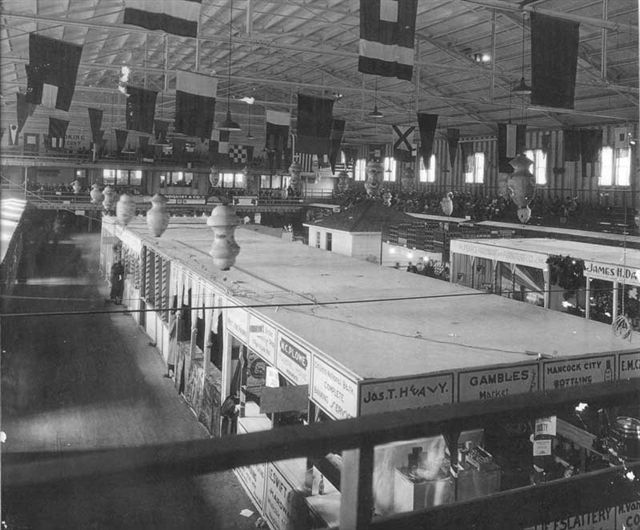 |
||
| The New Dee Ice Plant Dec 1953 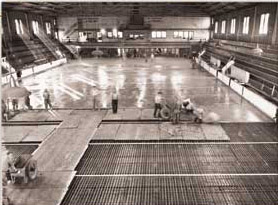 |
Removing the ice at the Dee 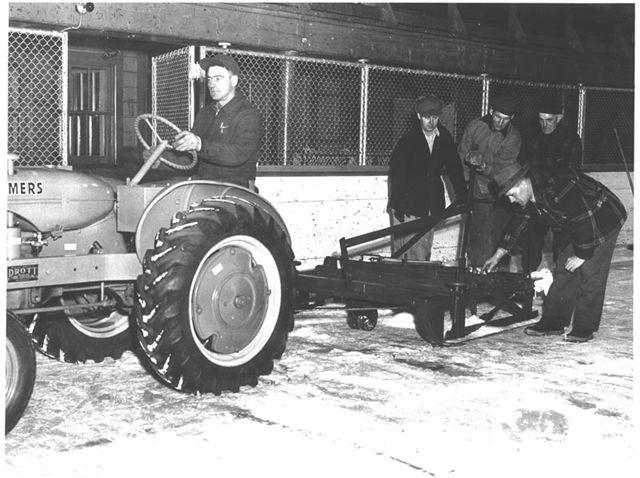 Driver is - , --, Joe Bukovich, --, --. 19-? |
The Dee in 2003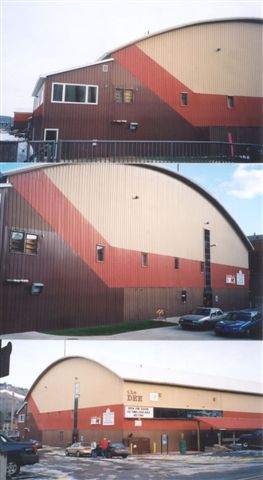 |
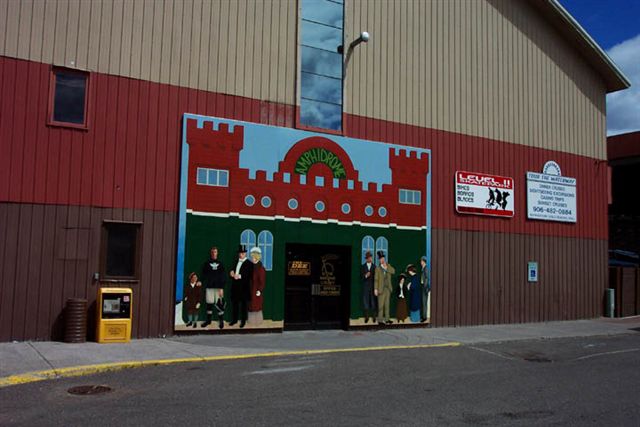 |
The Dee 2004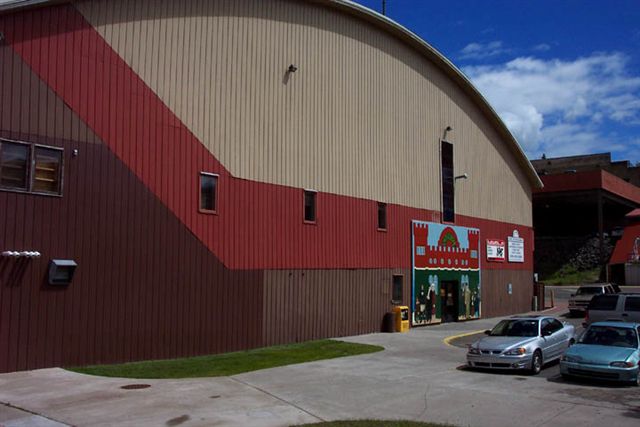 |
 |
|
|
|
| 1904:
The Palestra
was originally built in nearby Laurium,
MI, in 1904 by Nels
Ulseth of Calumet who was the
foreman for his uncle, Edward Ulseth, a Calumet area contractor. It had a seating capacity of 4,000 . The skating surface was 180
feet x 78 feet and was the first home of the Calumet professional hockey team
(IHL 1904-1907). The building itself was 265 feet long by 124 feet
wide, held up by 2x10 inch steel framing. In 1914, a new heating plant was installed and
according to the paper at the time: "carpenters [are]
engaged in rearranging the waiting rooms, offices, mechanical rooms and dancing
floor." The Palestra then went into a period of several years of disuse in Laurium until a group from Marquette Michigan, some 100 miles away, were looking to build Marquette's first indoor ice rink. They formed the Palestra Company and bought the Palestra for $15,000 on September 17, 1921. Edward Ulseth contractors of Calumet disassembled the rink, placed it on a rail car on the adjacent track to transport via rail to Marquette; 55 days later, Ulseth had it all reassembled on the corner of 3rd and Fair in Marquette in time to play the first game December 22, 1921. It sported natural ice until the late 1940s. In 1954, the ballroom was destroyed by fire and rebuilt, the building was then dismantled in 1974 when the nearby Lakeview Arena opened. This location is now occupied by the Berry Events Center ice rink which hosted the World Cup of Speed Skating in November of 2009. The Palestra name is Greek in origin, denoting "an athletic training center." The first hockey game was played in the Laurium Palestra Dec 16, 1904, between the two local representatives of the professional International Hockey League, Portage Lake and Calumet. Calumet won by a score of 4-3, attendance was 3,000. At the time, the population of the copper mining town of Calumet was 4,668. |
The Palestra's Grand Opening
Palestra in Laurium pre-1921
contact
webmaster if you have a picture |
The Palestra after moving to Marquette :
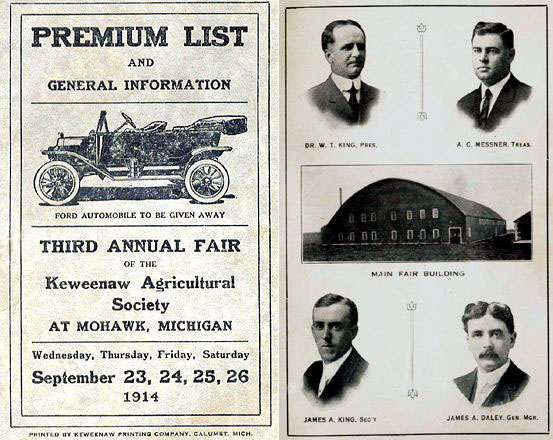
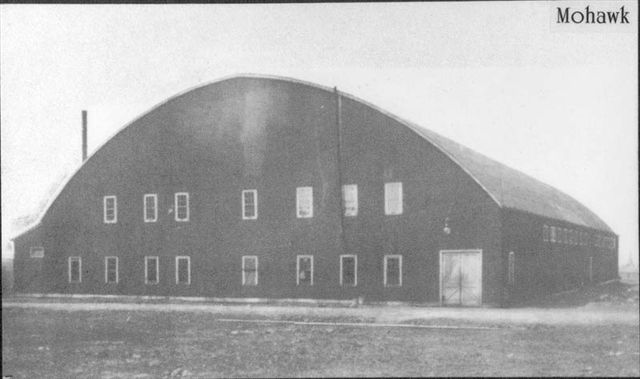
1908: The Glacia Dome in Mohawk, MI was opened in 1908 to 1931-32 in Mohawk. The building was just to the SE of where the grade school is now located; the entrance faced North. According to an article in the Daily Mining Gazette dated Dec 7, 1963: "...In 1908, a group of local men gathered together to form a corporation known as the Keweenaw Rink Company. Capital stock was set at ten thousand dollars, the number of shares to be one thousand with par value of ten dollars each. The originators and signers of the document were James A. Daley, Frank H. Getchell, J.P. Petermann, Willard J. Smith and Dr. A.R. Tucker. The building was constructed by Mohawk Mining Company carpenters and the rink had a surface approximately 72 by 158 feet, a few feet smaller than the Palestra [in nearby Laurium.] The Glacia dome opened for the first time on December 28, 1908. Regular skating and dancing parties were held with music provided on weekends and on special occasions by the Mohawk band, the Keweenaw band and the Red Jacket Band. Bowling alleys were installed on the second floor. Nate Cross was manager....The first hockey team was organized for the 1908-09 season. Many of these boys played on the 1910 and 1911 teams, which won the league championship for those years. Mohawk also played exhibition games with out-of-state teams and on such occasions, the Houghton County Traction Company ran special street cars to Mohawk for these events. The "Mohawk" hockey team won the Copper Country Intermediate Championship for the 1914-15 season..." Glaciadom company officers in 1911 were: WJ Smith -Pres, Dr. AR Tucker -secr/treas, and TH Berryman. Some time later, the interior was remodeled by owner John B. "Happy Jack" Betzing constructing a canteen [snack bar] and two change rooms on the lower floor and the upper story was converted into a ball room for dancing. The Keweenaw Band played there many times. The building closed in 1931 due to depressed economic conditions. Six years later, during the heavy snow of the 1937-38 winter, the back portion of the roof caved in. The Glaciadom was razed and sold for it's scrap wood that spring. (The world's first artificial ice rink was called the Glaciarium, it was located in Chelsea, London in 1876; perhaps the Mohawk Glaciadome was named after it!? )
|
|
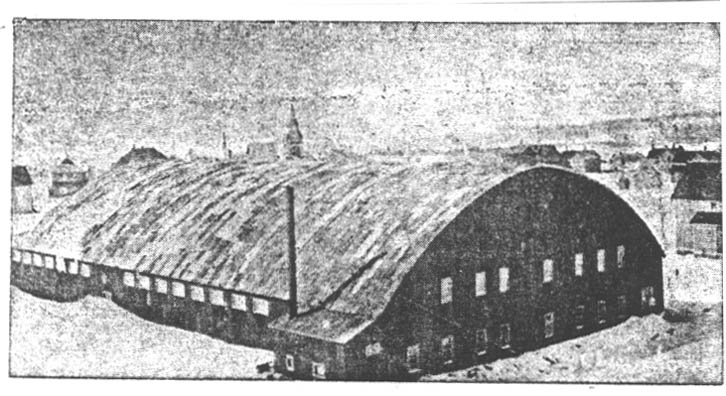 Glaciadom with snow damaged rear roof |
|
1913:
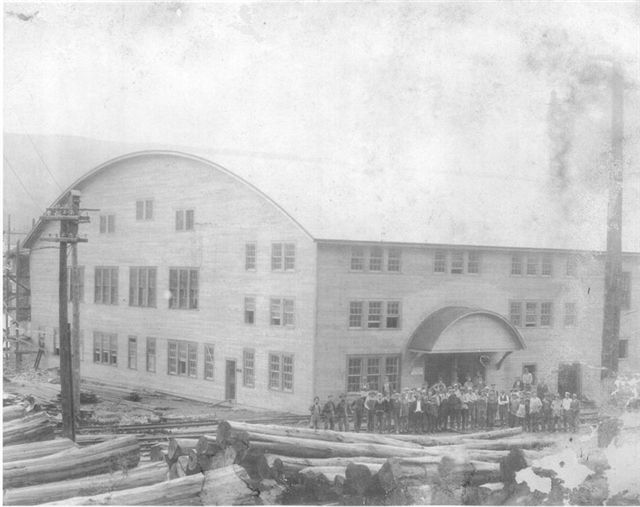
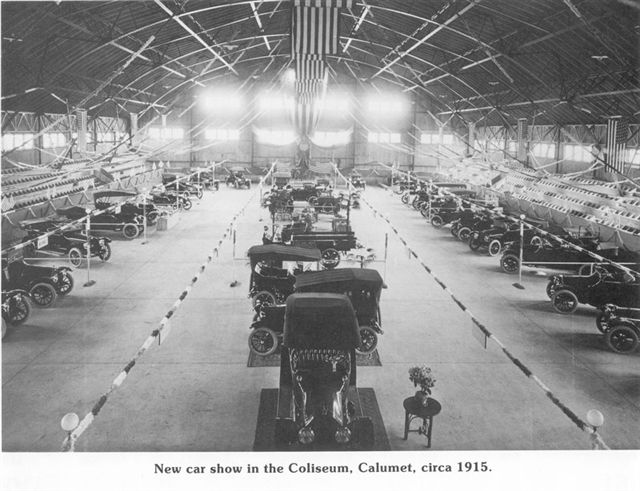
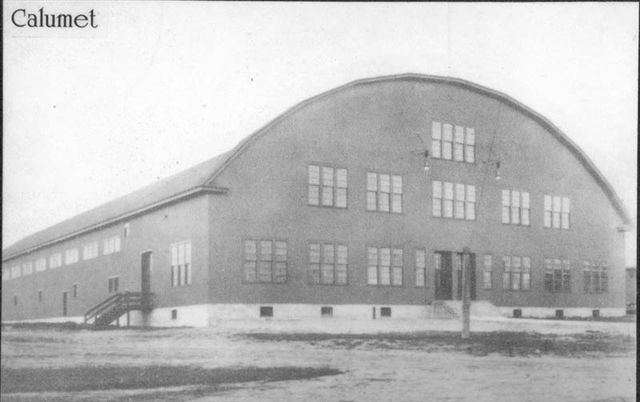
The Calumet Colosseum, was built in 1913
and is still in use as a ice rink today. The Colosseum is the OLDEST
operating indoor rink still in use in the WORLD! **
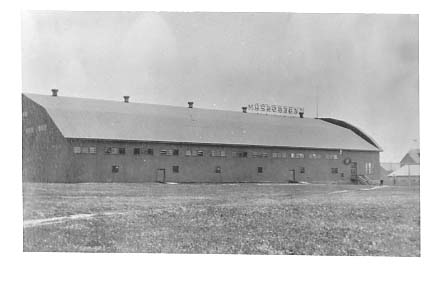
The Colosseum was constructed with "8 massive [metal] arches" and
had an electric sign above it that was 50 feet long and the "Colosseum" letters extended
8 feet above the ridge of the roof. Charles Nyberg was the first ice maker.
The Colosseum was sold to the State of Michigan in 1942 to replace the National
Guard Armory, which had burned down across the street on January 9, 1942. The Colosseum Rink
building was then called the Calumet Armory. Artificial ice was installed in the Armory
during the 1968-69 season and was available for the entire year in 1969-70,
which coincided with the advent of the current Lake Superior High School Hockey
Conference. This returned high school hockey to the arena for the first
time since World War II. The original high school league members in this
conference were Calumet,
Eagle River, Wis., Hancock, Houghton and Marquette. The Calumet Hockey
Association leased the ice surface from the State of Michigan each winter from
October to April, and sub-leased to other renters, offsetting their operating
expenses. According to Bob Erkkila: The installation of artificial ice put the Calumet Association on
a level playing field with Houghton, Marquette and Sault Ste. Marie for the
first time since it's inception. These other arenas had all benefited from
artificial ice in their facilities since the late 1940's and early 1950's. In
the summer of 2005, the National Guard moved into a new Armory, and the
Calumet Hockey Association, along with Calumet Township, took over the old
Armory building operations on a full time basis. In keeping with the history of this building,
they renamed the ice rink the
Calumet Colosseum as it had been called when it was first built in 1913.
Calumet Colosseum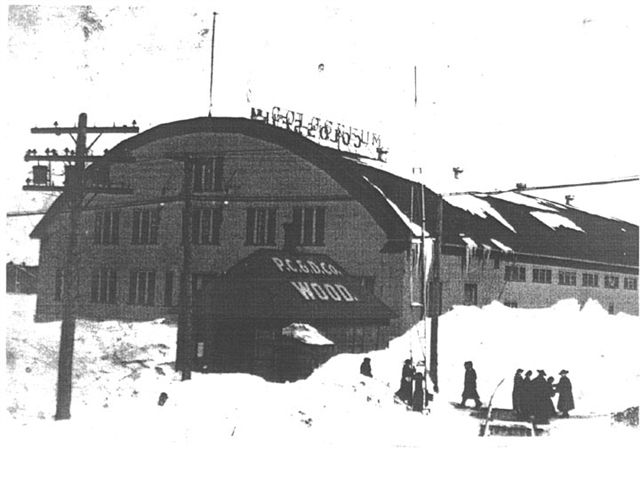
Photo courtesy of Paul Lehto |
Colosseum about 1915
|
Colosseum in Calumet 1925
|
Inside Colosseum 1927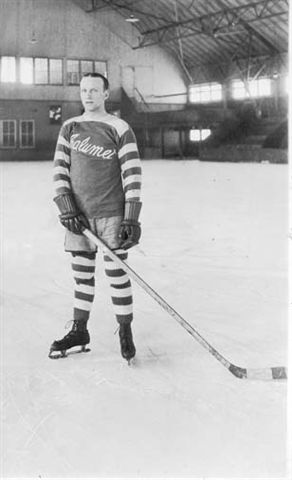 Pictured above is Wee Young, a hockey player on the Calumet Hawks team that won the MacNaughton Cup in 1928. His mother lived in Canada and was the team's "scout". Photo courtesy of Houghton County Museum. |
Calumet Colosseum
|
Calumet Armory Ice Arena 2004 now renamed the Calumet Colosseum 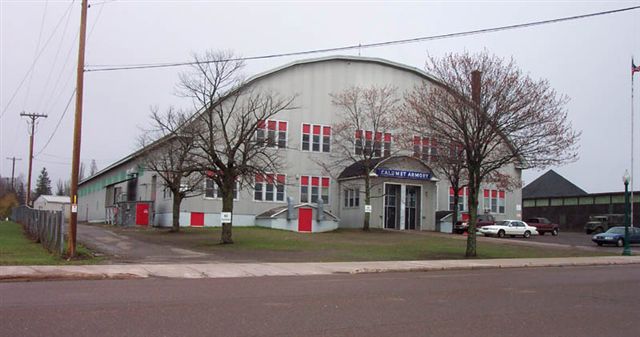 |
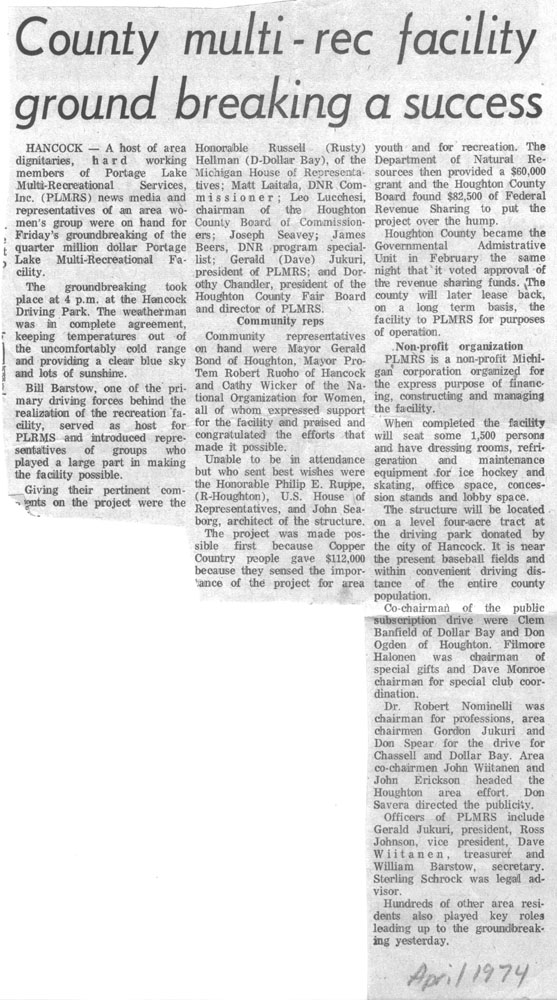
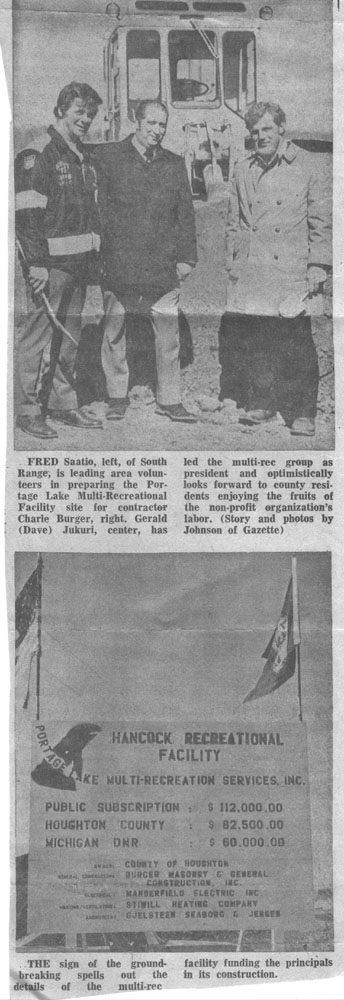
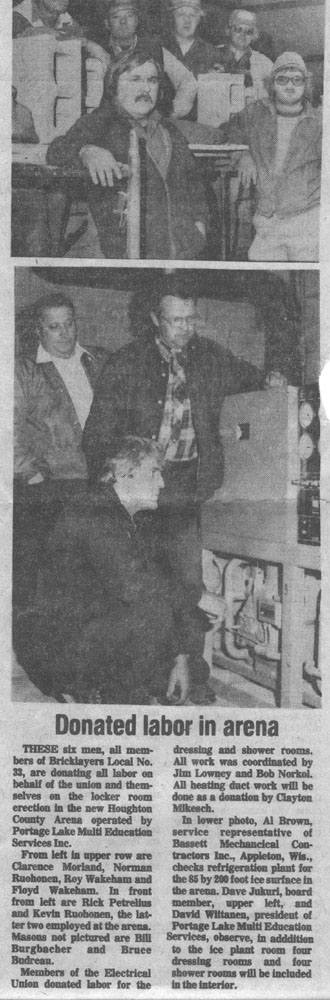
1974: The Houghton County Arena was built in the summer 1974 at the Driving Park in Hancock at a cost of a quarter Million dollars ($ 112,000 from public subscription, $82,500 from Houghton County via Federal Revenue Sharing, $60,000 Mich DNR Grant, along with many hours of donated labor and other financial and equipment donations.) It was built on a 4 acre tract donated by the City of Hancock at the Hancock driving park. The ice is 200 foot by 85 foot, with seating for 1,500 and originally with 4 dressing rooms and 4 showers; the ice plant was installed in late 1975. Locker rooms for the Hancock high school team were later added upstairs and then lockers for the Finlandia University men's and women's teams were added upstairs. In 2005, an enclosed spectator room was added above the rink.
|
Story of Arena April 1974 |
Ground Breaking April 1974 |
Ice Plant 1975-76 |
Houghton County Arena 1976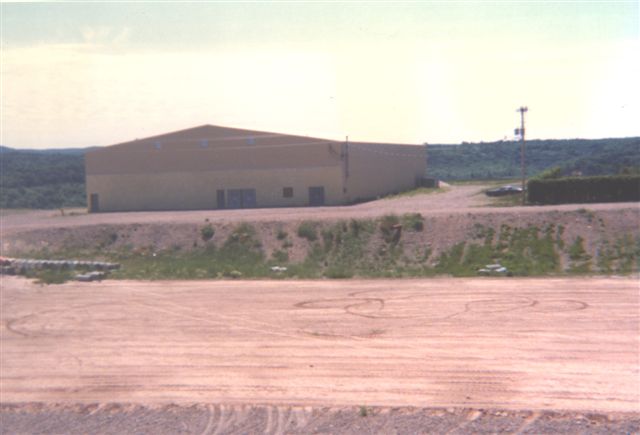 |
Houghton County Arena 2005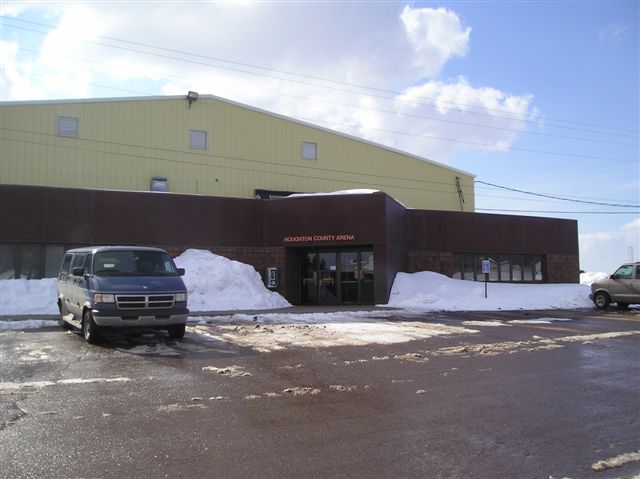 |
Houghton County Arena 2005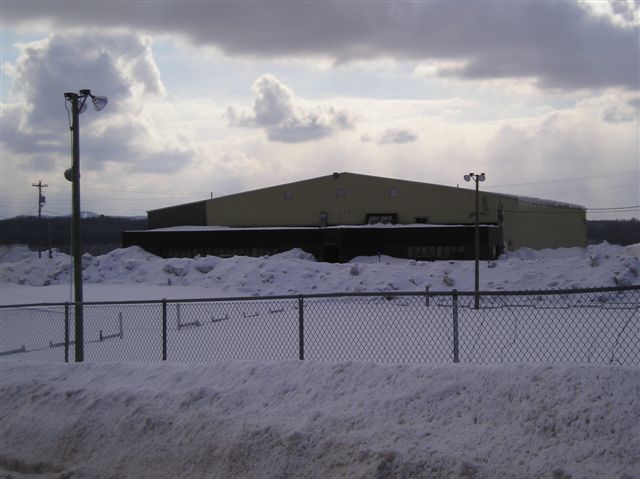 |
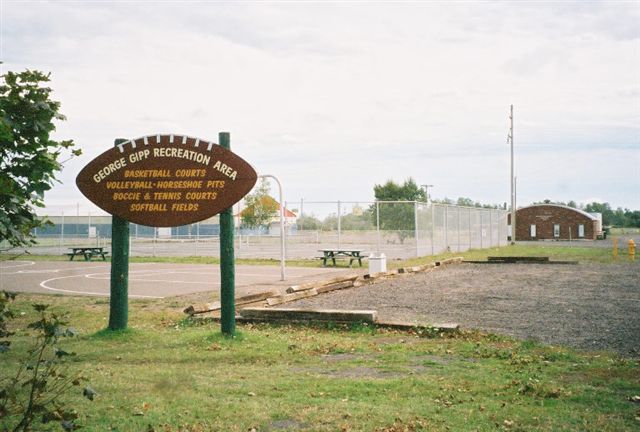
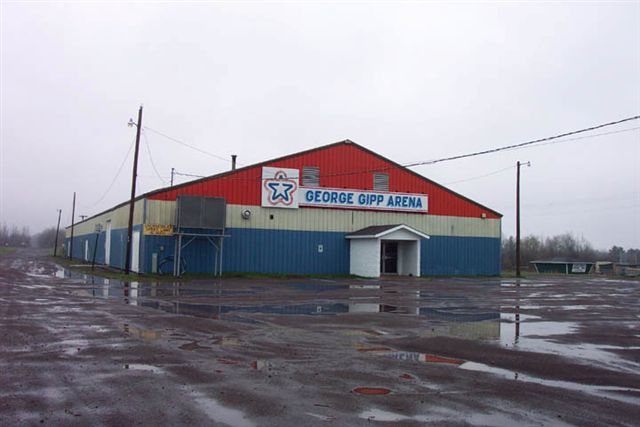
1976: The George Gipp Rink, originally called the Bi Centennial Ice Rink, in Laurium was built in 1976. The lockers were added in 19-- and the ice plant in 19--. The building name was changed to the George Gipp Area in 19-- as a tribute to the famed Norte Dame football player who grew up here in Laurium. This artificial ice facility was a non-regulation size rink, but excellent for the development of the younger players. When public skating was no longer available at the Calumet Armory due to liability concerns, this Laurium Village owned rink became the main source of open skating for the area for a while, according to Bob Erkkila.
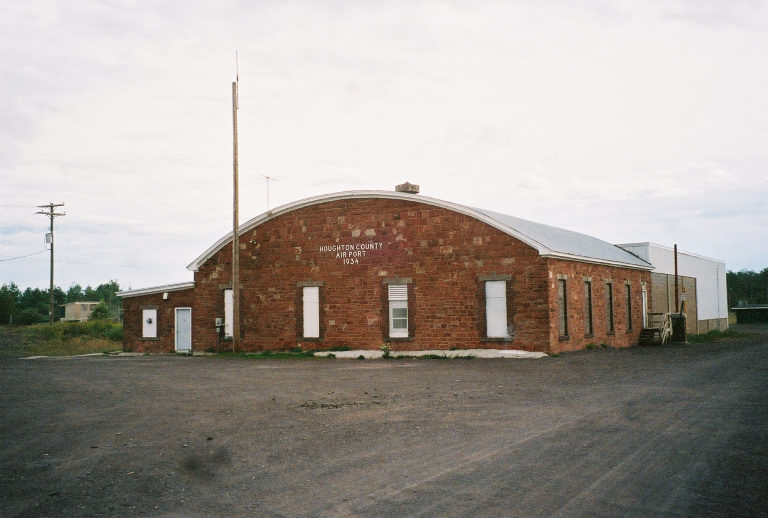
Next to this rink is the former Laurium Airport Rink. This was originally a 80x60 foot brick building that was built during the Depression by WPA workers to serve as an airplane hanger. It was completed in 1934 and was used for a hanger until the airport was closed to all air traffic in the late 1950's. In the early 1960's, it was remodeled from the 80x60 foot airport hangar into a 140x60 foot enclosed natural ice skating and hockey rink by the Village of Laurium who owned the building. It was used by the Calumet Hockey Association, the Calumet Figure Skating Club, for hockey rentals, and for public skating. The rink was very small and was used only for practices by the older teams and for games for the younger mites and occasionally squirt age players. It remained in use as a rink until 1976 when the Bi-Centennial Arena was erected as it's replacement. The old hanger rink is still owned by the village and serves as a garage and repair facility for their equipment and vehicles.
|
Laurium Airport Hanger Rink |
George Gipp Recreation Area |
George Gipp Arena in 2004 |
1979: The Torch Lake Arena was constructed between Lake Linden and Hubbell in nearby Torch Lake Township in 1979. This new natural ice facility, built on the same site as the previous ice rink which caved in during the record snowfall winter of 1978-79, became know as the Torch Lake Arena. The Calumet Hockey Association began using this rink on a regular basis for junior hockey practice and games. With access now to three rinks, the CHA was able to give their players 3 to 5 hours of ice time per week on a regular basis throughout the 1980's. Unfortunately, rising operating expenses forced the township to cut back on arena funding and the rink was closed in 1997. In it's last four years of operation it had been used primarily for public skating and curling. need picture here...
The Portage Lake Pro team played Pittsburgh teams in the Duquesne Gardens Arena in Pittsburgh, the first artificial ice rink.
Of course there was outdoor skating around the Copper Country for people of all ages:
Skating on Portage Lake early 1900s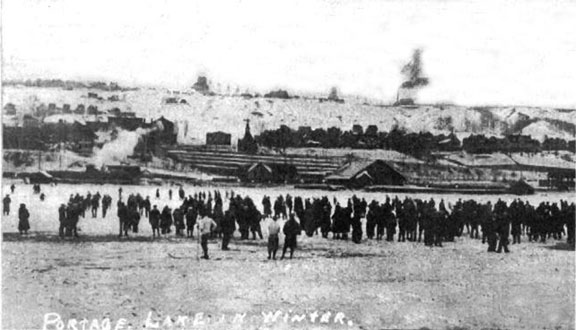
Looking towards Hancock in the background. Photo courtesy of Houghton County Museum |
| Central Rink or Tamarack Rink near Calumet  unknown date A reader suggests this is the Tamarack ice rink in Tamarack Location near Calumet: "It didn't have any boards; it did have a warming shack with a stove - a place to put on your skates, and warm up. It was used for local public skating and pick-up hockey games. Size, probably around 160 x 80 feet or so. Like most outdoor rinks in the Copper Country, the kids using the rink kept it scraped and flooded." info from Sandie (Koskiniemi) & David Harjala. |
There even was a skate rink at the CCC Camp
at Camp Pori near Mass; this later became a WWII Prisoner of War Camp
where German POWs were used to log the timber since most local able bodied
men had left for war.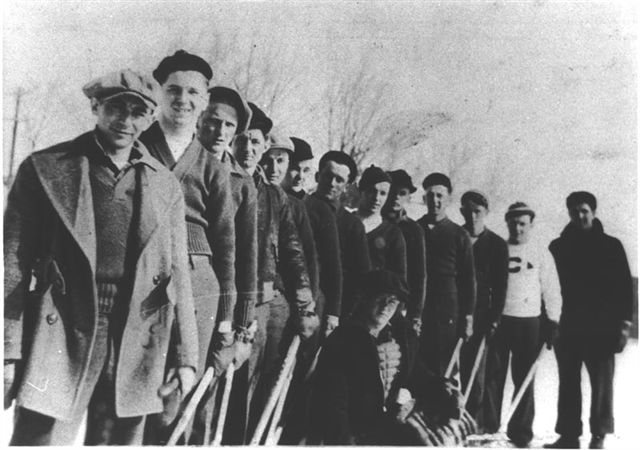 1937 Camp Pori Hockey team 3rd from left is Pete Tolonen Photo courtesy of Harold Heikkinen |
Copper City Rink (need picture) Reminiscing from Dave Harjala: "I grew up using and maintaining the Copper City ice rink from 1950 to 1962 when I went into the Army. We had nice 4 ft boards all the way around, a 180x90 ft surface, oil heater, old fire hose to flood with, and a powerful outdoor speaker for the music for skating. It was great! We always had crowds for skating every evening, and fun local pickup hockey as well as games with our neighboring rinks in Ahmeek and Fulton Location. Some of my best childhood memories are the all-night flooding to build up the ice surface in the first week of December; rushing home from school to get our hockey gear so we could play before supper and before public skating; and many hours of keeping fit by scraping and shoveling the snow over the boards. We didn't have snow blowers then. We sold pop and snacks in the concession corner where the 45rpm record player and power amplifier were, which helped pay for utilities and new records. What memories this has stirred up!... It is interesting that those images are as fresh in my mind as if it was yesterday, such as the hanging strings of lights with insulated sockets wrapped with friction tape (the same tape we used on our hockey sticks) with bare 100 watt light bulbs! (We often had to clean broken glass off the rink when the puck broke a light bulb!)" |
| Note the Dates on the "Original Six" ice
rinks, built 20 some years after our enclosed rinks: 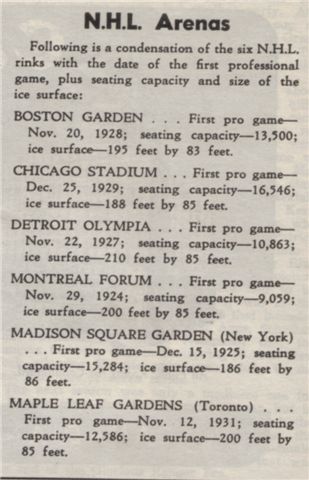 |
**The Boston-Matthews Arena owned by
NW University in Boston and first opened in 1910, claims to be the oldest
operating indoor ice rink in the world. However, they are ignoring the fact that
their rink burned downed not once, but twice, first in 1918 (see photo below) and again in 1948;
their own webpage tells how the rink has been rebuilt 4 times. THEREFORE, the
Calumet Colosseum, built in 1913 is the OLDEST indoor ice rink still in
operation in the WORLD! The Amphidrome indoor rink, built in nearby
Houghton, Michigan was built in 1902; if we ignore the fact that the original Amphidrome burned down in 1927, and was
rebuilt in time for the next season on the same footprint, then the Amphidrome-Dee Stadium is the
oldest indoor ice rink in the World! However, even though the Amphidrome -Dee
rink was first built in 1902, we consider the age of the current Dee rink, which was built on
the same rink surface, in 1927. This date makes the Amphidrome -Dee Stadium in
Houghton Michigan the Sixth Oldest Indoor Ice Rink in the WORLD! The Second
Oldest operating indoor ice rink in the world is Canada's oldest rink; the Galt
Arena Gardens in Cambridge, Ontario, Canada, opened in 1922 and is still used
as an ice rink today.
OLDEST operating Indoor ice rinks in the World:
1. Calumet Colosseum in Calumet, Michigan, United States; built in 1913.
2. Galt Arena Gardens in Cambridge, Ontario, Canada; built in 1921, opened
January 1922.
3.
Hobey Baker
Memorial Arena, Princeton, New Jersey, United States; completed in 1923.
4. Stratford Arena now called the
William Allman Memorial Arena, in Stratford,
Ontario, Canada, built in 1924 opened Dec 1924.
5.
Varsity Arena, University of Toronto, Ontario, Canada opened December 1926;
a new roof was installed in 1950, and ice surface and building totally renovated
in 1985/86 so is it really same building? please comment
6. Amphidrome - Dee Stadium in Houghton, Michigan; originally built in 1902, was
burned in 1927 and rebuilt on the same footprint immediately in 1927.
(Windsor Arena, first called the Border Cities Arena, aka The Barn, Windsor, Ontario, Canada opened in 1925 closed 2013)
The Boston-Matthews ice rink claims to be the oldest rink in the world however, the original building which opened in 1910, burned down in 1918 and again in 1948 and structurally has undergone numerous renovations:
|
Boston Arena 1910 |
Boston Arena 1915
|
Boston Arena burned out 1918 |
|
Boston Arena 1920s:

|
|
|
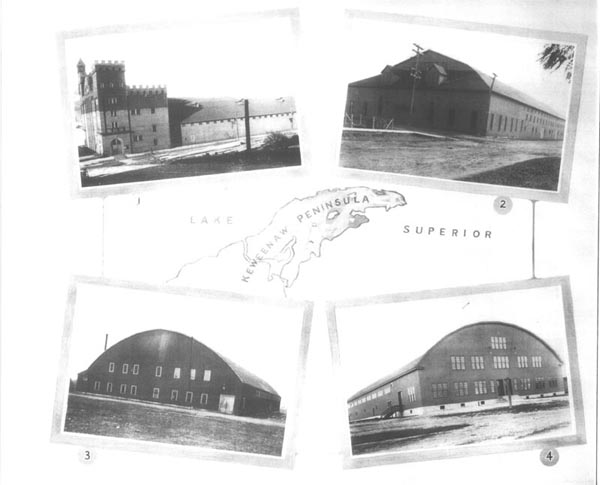
1. Amphidrome in Houghton
1902-1927, fire, rebuilt by next season
2. Palestra in Laurium 1904-1921 (then moved to Marquette 1921-1974)
3. Glaciadome in Mohawk 1909-1931
4. Calumet Colosseum Ice Rink 1913-present
Please contact webmaster if you have any additional info or pictures of local Ice Rinks.
Web Page designed, researched and maintained by Connie Julien
copyright 2003-2011